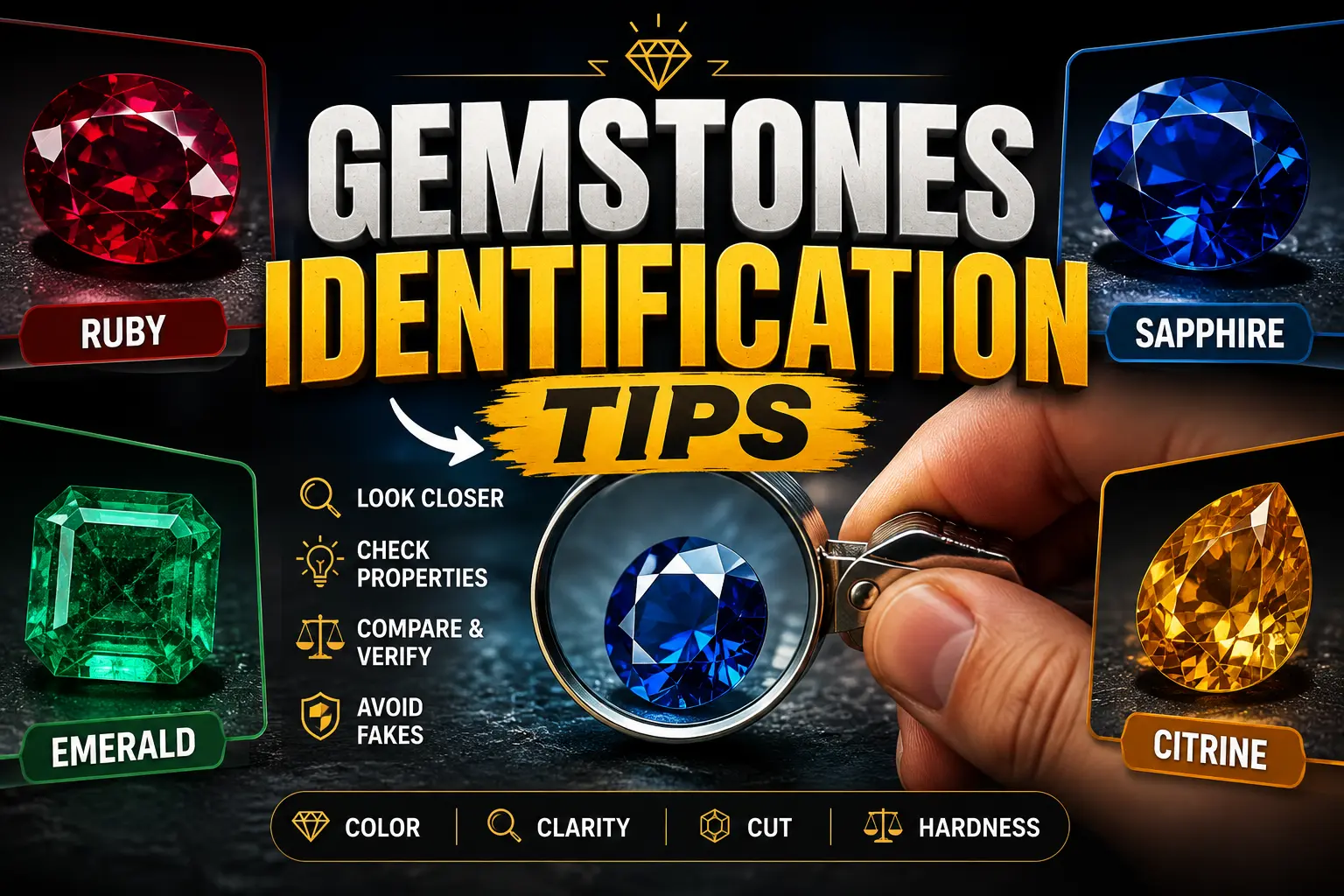
How to Identify Gemstones: A Beginner’s Complete Guide
Gemstones have fascinated people for centuries because of their beauty, rarity, and value. Whether you’re buying your first gemstone, starting a jewelry collection, or simply curious about the stones you own, learning how to identify gemstones is an important skill.
Many beginners believe that identifying a gemstone is as simple as looking at its color. In reality, professionals examine several characteristics before determining what a gemstone actually is.
This is the blog of gemstone identification tips where we’ll explain the basic methods used to identify gemstones without diving into the unique properties of every individual stone. Those deserve their own detailed guides.
Why Is Gemstone Identification Important?
Proper gemstone identification helps you:
Avoid buying fake or synthetic stones.
Understand the value of your gemstone.
Choose the right stone for jewelry.
Take proper care of your gemstones.
Build confidence when shopping online or in stores.
Here are some basic Gemstone Identification Tips:
1. Observe the Color
Color is the first thing most people notice when looking at a gemstone, but it shouldn’t be the only factor you consider.
Pay attention to:
Primary color
Secondary hues
Color intensity
Color consistency
Many gemstones come in similar colors, so relying only on appearance can lead to mistakes. A green stone, for example, could belong to several different gemstone families.
2. Examine the Clarity
Clarity refers to how clean or flawless a gemstone appears.
Look closely for:
Internal inclusions
Tiny cracks
Cloudy areas
Natural patterns
Natural gemstones often contain small inclusions formed during their growth, while synthetic stones may appear almost flawless. However, a flawless gemstone is not always artificial, and an included stone is not necessarily low quality.
3. Check the Transparency
Gemstones are generally classified into three categories:
Transparent
Translucent
Opaque
Observing how much light passes through a gemstone can provide helpful clues during identification.
4. Look at the Luster
Luster describes how light reflects from a gemstone’s surface.
Some common types include:
Glassy
Silky
Pearly
Metallic
Waxy
A gemstone’s shine often reveals more than its color and can help distinguish between different types of stones.
5. Inspect the Cut
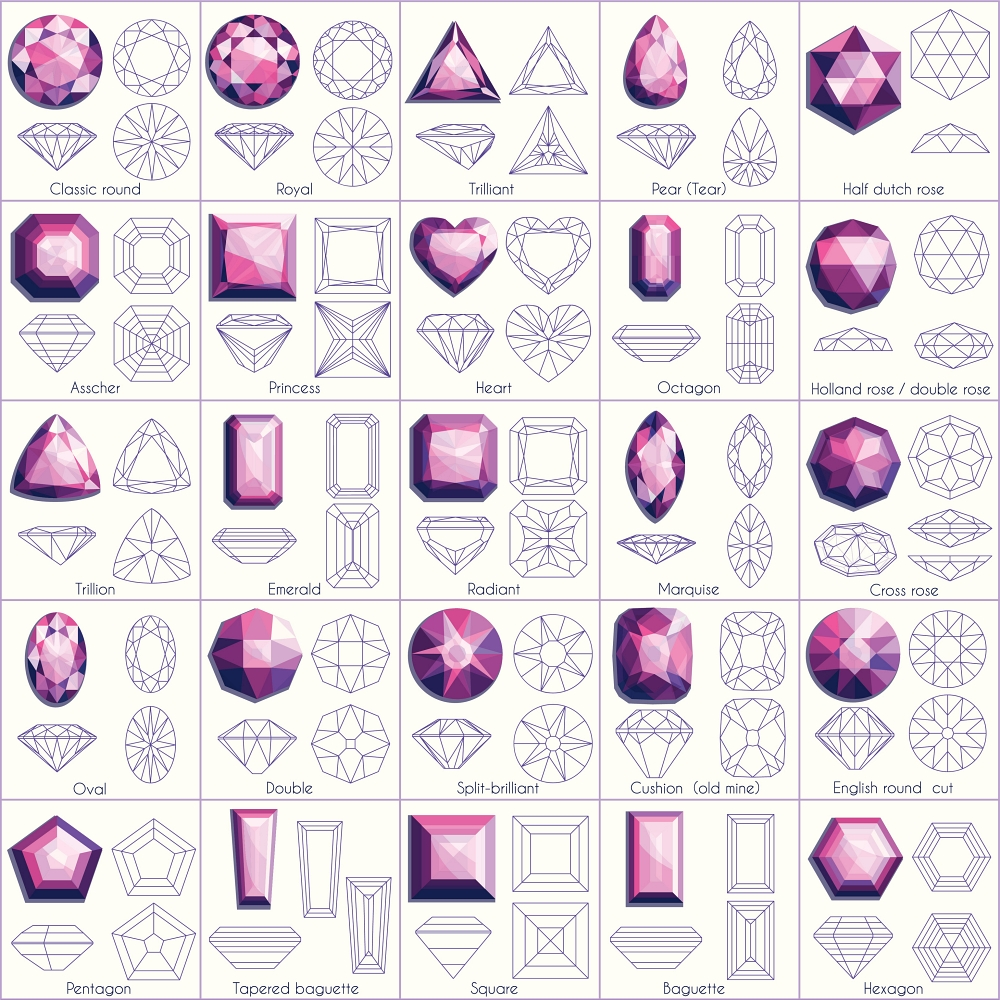
The cut doesn’t determine the type of gemstone, but it can reveal valuable information about its quality.
Check for:
Even symmetry
Smooth polishing
Well-defined facets
Balanced proportions
A well-cut gemstone reflects light beautifully and makes examination much easier.
6. Feel the Weight
Different gemstones have different densities. Two stones that appear identical in size may feel noticeably different in weight.
Professionals use specific gravity tests, but beginners can simply compare stones of similar size to develop a sense of their relative weight.
7. Consider the Hardness
Hardness measures how resistant a gemstone is to scratching.
The Mohs Hardness Scale ranges from 1 (very soft) to 10 (extremely hard).
Avoid performing scratch tests on valuable gemstones because they can permanently damage the stone. If hardness needs to be verified, it’s best to consult a professional.
8. Inspect Under Proper Lighting
Lighting plays a major role in gemstone identification.
For the most accurate view:
Use natural daylight whenever possible.
Avoid colored LED lights.
Stay away from dim or overly yellow lighting.
Good lighting allows you to observe the gemstone’s true color, clarity, and brilliance.
9. Use a Jeweler’s Loupe
A 10x jeweler’s loupe is one of the most useful tools for beginners.
It helps you examine:
Inclusions
Surface scratches
Tiny cracks
Polish quality
Even an affordable loupe can reveal details that are impossible to see with the naked eye.
10. Look for a Gemstone Certificate
If you’re purchasing an expensive gemstone, always ask for a certification from a recognized gemological laboratory.
A certificate typically confirmsgemstone
Whether the gemstone is natural or synthetic
Any treatments applied
Weight and dimensions
The gemstone’s identity
Certification provides peace of mind and helps protect your investment.
Common Mistakes Beginners Make
Avoid these common mistakes when identifying gemstones:
Judging a gemstone only by its color.
Assuming every flawless gemstone is natural.
Buying expensive stones without certification.
Performing scratch tests at home.
Trusting sellers without doing your own research.
Quick Gemstone Identification Checklist
Before buying a gemstone, ask yourself:
Does the color look natural?
Are there visible inclusions?
Does the stone have a healthy shine?
Does the weight feel appropriate?
Is a certification available?
Is the seller trustworthy?
Taking a few extra minutes to answer these questions can help you avoid costly mistakes.
Useful Tools for Beginners
If you’re interested in learning more about gemstones, consider keeping these simple tools:
10x Jeweler’s Loupe
LED Flashlight
Magnifying Glass
Soft Cleaning Cloth
Gemstone Tweezers
Digital Gem Scale
UV Flashlight (optional)
These basic tools can greatly improve your ability to examine gemstones safely.
When Should You Consult a Professional?
Some gemstones look remarkably similar, making them difficult to identify without specialized equipment.
If you’re dealing with a valuable stone or planning to make a significant purchase, consulting a certified gemologist is the safest choice. Professional testing can determine whether a gemstone is natural, synthetic, treated, or an imitation.
Final Thoughts
Learning how to identify gemstones is a skill that develops with practice and observation. Instead of relying on a single characteristic like color, examine multiple features such as clarity, transparency, luster, weight, hardness, and overall appearance.
Remember that gemstone identification is a combination of careful observation and proper knowledge. By understanding these basic principles, you’ll be better prepared to make informed decisions whether you’re buying gemstones for jewelry, collecting them, or simply exploring the fascinating world of precious and semi-precious stones.
As your experience grows, you’ll become more confident in recognizing quality gemstones and avoiding common pitfalls.